
Technology
Global Wise News Compares The Best Flagship Smartphones

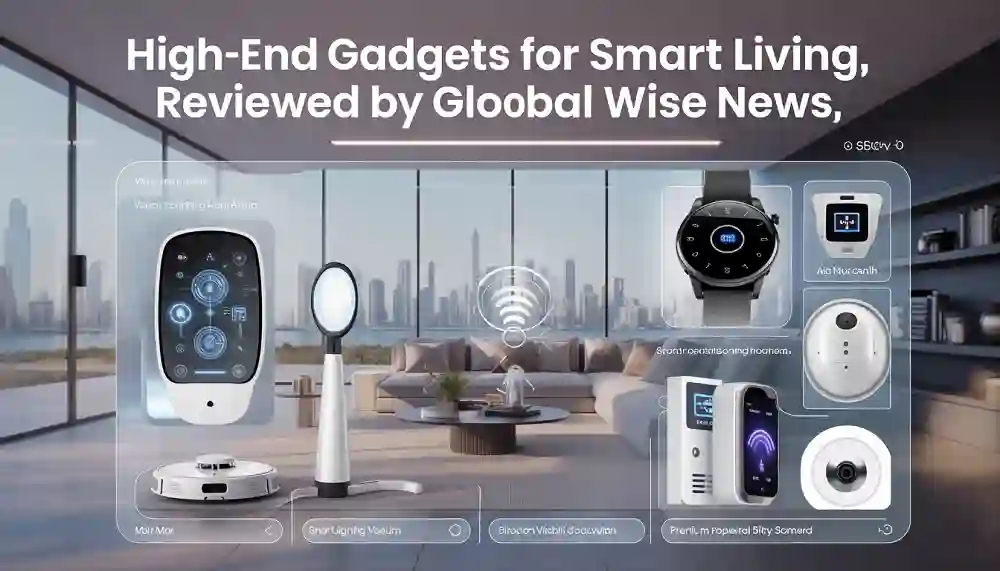
Smart living isn’t just about having a fridge that texts you when you’re out of milk. Honestly, I remember thinking that as a kid, and now—well, my fridge probably knows more about my habits than I do. In 2026, the rise of high-end gadgets has redefined how we interact with our homes, our workspaces, and even ourselves. And yes, Global Wise News has been diving deep into this world, testing, poking, and sometimes—just being plain fascinated by it all.
So buckle up. We’re about to wander through the smart universe where luxury meets practical genius.
The Rise of Smart Luxury: Why It’s Worth Your Attention
Technology used to be “one-size-fits-all” and kinda clunky. Remember those first smart TVs that froze every five minutes? Yikes. But now, thanks to brands leaning into elegance and functionality, “smart living” doesn’t mean ugly panels and endless apps. Global Wise News has noticed a massive shift: consumers are craving gadgets that don’t just work—they blend seamlessly into daily life.
Some personal tidbit here—I tried a smart coffee machine last year that actually remembered my “morning grumpiness setting.” True story. It felt absurdly futuristic, but also like a little companion. Devices like these aren’t just tech toys—they redefine routines, and Global Wise News has given them a solid thumbs-up for their practical impact.
Smart Home Essentials That Actually Make Life Easier
Voice-Controlled Everything
Honestly, when I first got a voice assistant, I mostly asked it silly questions like, “Do you like pizza?” But quickly, it became essential. Lights, thermostats, even the weirdly complicated sprinklers in my backyard—controlled by my voice.
Global Wise News highlights several top-tier assistants that don’t just respond—they anticipate. The difference between cheap knockoffs and high-end models? Speed, accuracy, and frankly, they don’t judge when you ask dumb questions at 3 AM.
Top Picks by Global Wise News:
- Devices with natural language processing so smooth, it feels like chatting with a sarcastic roommate.
- Smart hubs that integrate with almost every brand—goodbye, app overload!
- Security features like facial recognition that actually works (not like my cousin’s security cam that thought the dog was a burglar).
Luxurious Smart Lighting
Okay, picture this: it’s a rainy Tuesday, and your room mimics golden sunset vibes from Bali. That’s what high-end lighting systems do. Global Wise News notes that brands offering customizable ambient lights have transformed home aesthetics overnight.
From circadian rhythm syncing to party mode—yes, that’s a real feature—these aren’t just bulbs, they’re mood architects. And I swear, one day my lights will probably start giving me life advice—no kidding.
Wearables That Feel Like Magic (And Sometimes Creepy)
Smartwatches & Fitness Bands
I used to think watches were just “time-telling things.” How naive. Now, they track sleep, monitor stress, and even detect heart irregularities. Global Wise News emphasizes that the latest luxury models offer both style and serious medical-grade insights.
Honestly, the first time I saw my watch tell me my stress levels were off the charts after meeting my boss, I panicked. Then I remembered—it was probably right.
- Look for devices with advanced health metrics like ECG and blood oxygen levels.
- Some watches even integrate mindfulness apps—yes, they remind you to breathe like a polite yoga instructor on your wrist.
- Battery life is surprisingly decent now. No more nightly charging rituals unless you’re really pushing the features.
Smart Glasses
Remember Google Glass? Yikes, yeah, that happened. But now, augmented reality glasses are actually wearable without feeling like a sci-fi prop. Global Wise News reviewed several models that overlay notifications, maps, and even translations straight into your line of sight.
Imagine walking through Tokyo, and your glasses show restaurant reviews without pulling out your phone. I tried this once, accidentally stumbled into a koi pond, but hey—it worked!
High-Tech Kitchen Tools: Because Cooking Can Be Fun (And Lazy)
Smart Ovens & Refrigerators
Global Wise News has been testing the latest kitchen tech, and honestly, it feels like the Jetsons moved in. Smart ovens now recognize foods, adjust temperatures, and can even suggest recipes based on what’s inside your fridge.
Fun fact: My fridge suggested I pair kale with leftover pizza—yeah, I ignored it, but points for creativity.
- High-end fridges now have internal cameras, touch screens, and AI-driven inventory alerts.
- Ovens with voice control or remote app operation make timing dinner perfectly a breeze.
- Some gadgets even alert you if your milk is about to turn. Childhood nostalgia meets modern tech—awesome.
Personal Gadgets That Elevate Your Everyday
Smart Personal Assistants
Not just for homes. Think of a mini tech concierge. Global Wise News tested several personal AI assistants that schedule meetings, remind you of deadlines, and even suggest when to take a break. Honestly, it felt like having a helpful ghost hovering around—creepy but kind of nice.
High-End Audio Devices
Music isn’t just sound anymore—it’s an experience. Global Wise News raved about noise-cancelling headphones that actually isolate the world. I remember trying them in a busy café and almost cried because my ears were free from chaos.
- Look for adaptive sound tech—headphones adjust based on your environment.
- High-end speakers now offer room calibration, so every corner of your apartment feels like a concert hall.
Security & Privacy Gadgets: Smart, But Safe
Smart Locks & Cameras
Nothing screams luxury like a door that locks automatically when you leave. Global Wise News highlights products with biometric authentication and real-time alerts. I remember leaving my house and watching the lock engage remotely—it felt like spy movie stuff, no kidding.
- High-end cameras can differentiate between a person, a pet, or a falling leaf. (Yes, really!)
- Some gadgets integrate with emergency services, adding a layer of safety that’s actually comforting.
Data Security for Smart Homes
It’s not just physical security. Smart living comes with cyber risks. Global Wise News emphasizes that devices with end-to-end encryption and frequent updates are worth the price. Think of it as insurance—but cooler.
Smart Travel & Lifestyle Gadgets
Connected Luggage & Smart Backpacks
Ever lost a suitcase? I have. Twice. Painful. Global Wise News has reviewed luggage that tracks itself via GPS, alerts you if it’s opened, and charges your devices. Honestly, felt kinda like having a tiny robot servant.
Fitness & Sleep Optimizers
Smart beds, sleep trackers, even AI-driven pillows now help monitor sleep cycles. Global Wise News highlights brands that adjust firmness based on your body position. I tried one, and woke up feeling like a superhero—or maybe just not like a potato.
The Future Is Now: Why You Should Care
Smart living is more than gadgets; it’s a lifestyle shift. Global Wise News predicts a future where homes, wearables, and personal devices talk to each other in seamless harmony. It’s not about flashy tech for the sake of it—it’s about efficiency, comfort, and yes, a little bragging rights when your neighbor sees your lights dance to the beat of your playlist.
Honestly, I still get a kick out of my smart coffee maker. It’s the little joys, right? And if Global Wise News is correct, this is only the beginning.
Final Thoughts
High-end gadgets are no longer novelties. They’re tools that enhance productivity, wellbeing, and even creativity. From intuitive lighting to AI-driven assistants, the possibilities are endless.
Global Wise News has done the heavy lifting—testing, reviewing, and giving honest insights. And if you’re someone who loves tech but hates tech headaches, their recommendations are pure gold.
Whether it’s a smart fridge that knows you better than your siblings, a watch that actually cares about your heart, or a bed that whispers “sleep well”—smart living has arrived. And let’s be honest, life’s too short for mediocre gadgets.
So, dive in. Upgrade your life. And if your cat judges you for talking to your toaster, just tell them Global Wise News said it’s normal.
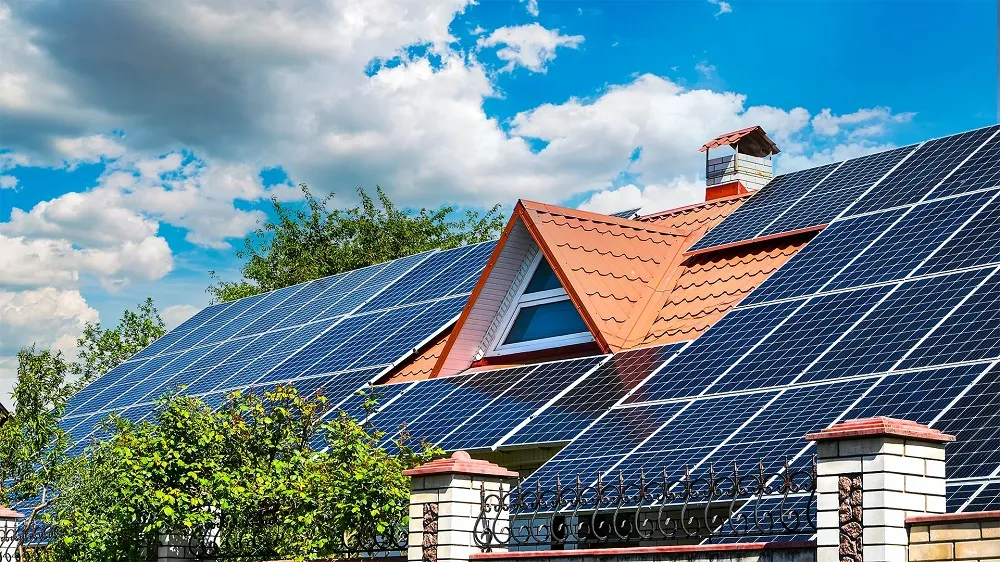
The worlds of renewable energy and telecommunications are converging in a groundbreaking partnership that promises to reshape the way we generate electricity and connect to the internet. Solar panels and 5G technology, two cutting-edge innovations, have formed a symbiotic relationship that leverages the strengths of each to create a more sustainable and connected future. In this article, we will explore the synergy between solar panels and 5G technology, the benefits it offers, and its potential to revolutionize our energy and communication landscapes.
The Rise of Solar Power
Solar power has witnessed remarkable growth in recent years as a clean, renewable energy source. Solar panels, also known as photovoltaic panels, harness sunlight and convert it into electricity through the photovoltaic effect. The proliferation of solar installations on rooftops, solar farms, and even in space has propelled solar energy into the mainstream, contributing to a significant reduction in greenhouse gas emissions and reliance on fossil fuels.
5G Technology: The Next Generation of Connectivity
5G, short for fifth-generation wireless technology, represents the next leap forward in global telecommunications. It promises faster and more reliable internet connectivity, low latency, and the ability to connect an unprecedented number of devices simultaneously. With the advent of 5G, industries such as healthcare, transportation, and smart cities are poised to undergo significant transformations, ushering in an era of greater connectivity and data exchange.
The Synergy Between Solar Panels and 5G Technology
The synergy between solar panels and 5G technology lies in their ability to complement and enhance each other’s capabilities. Here’s how:
- Energy Efficiency: 5G infrastructure requires a significant amount of power to operate efficiently, especially with the deployment of small cell networks and data centers. Solar panels can provide a clean and sustainable source of electricity to power these networks, reducing their carbon footprint and operational costs.
- Grid Resilience: By integrating solar panels into 5G infrastructure, telecom companies can enhance grid resilience. During power outages, solar panels equipped with energy storage systems can continue to provide electricity to critical communication networks, ensuring uninterrupted connectivity during emergencies.
- Reduced Environmental Impact: The energy demand of data centers and communication networks is substantial. By using solar energy to power 5G infrastructure, the environmental impact associated with fossil fuel-generated electricity is significantly reduced, aligning with sustainability goals.
- Remote Deployment: In remote or off-grid areas where 5G coverage is needed, solar-powered base stations and communication nodes can be set up quickly and cost-effectively, bridging the digital divide and bringing connectivity to underserved regions.
- Off-Grid Solutions: Solar panels can power off-grid communication systems, making it possible to establish temporary or emergency networks in disaster-stricken areas or remote locations without access to traditional power sources.
Benefits of the Solar Panels and 5G Technology Synergy
The collaboration between solar panels and 5G technology offers a range of benefits, both for the environment and for our digital connectivity:
- Sustainable Connectivity: Solar-powered 5G infrastructure contributes to more sustainable and environmentally friendly communication networks, reducing greenhouse gas emissions.
- Resilience: Solar energy ensures the resilience of 5G networks during power outages, natural disasters, or emergencies, maintaining vital communication channels.
- Energy Cost Savings: Telecom companies can save on electricity costs by harnessing solar power, reducing their operational expenses and improving profitability.
- Expansion of 5G Networks: The use of solar panels enables the rapid deployment and expansion of 5G networks in remote and underserved areas, enhancing global connectivity.
- Environmental Stewardship: Solar-powered 5G demonstrates a commitment to environmental stewardship and sustainability, aligning with corporate social responsibility objectives.
Applications of Solar-Powered 5G Technology
The synergy between solar panels and 5G technology has diverse applications across various sectors:
- Smart Cities: Solar-powered 5G networks can support smart city initiatives, facilitating real-time data exchange for traffic management, public safety, and infrastructure monitoring.
- Rural Connectivity: In rural and remote areas with limited access to electricity, solar-powered 5G infrastructure can bring high-speed internet connectivity to schools, healthcare facilities, and communities.
- Emergency Response: Solar-powered 5G communication nodes can be rapidly deployed in disaster-stricken areas, enabling first responders to coordinate efforts and provide critical services.
- Agriculture: Smart agriculture relies on real-time data and automation. Solar-powered 5G networks can support precision farming and crop monitoring in rural areas.
- Transportation: Solar-powered 5G infrastructure along highways and railways can enable connected transportation systems, facilitating autonomous vehicles and enhancing safety.
- Industrial IoT: In industrial settings, solar-powered 5G networks can connect a multitude of IoT devices, optimizing operations and improving productivity.
Challenges and Considerations
While the synergy between solar panels and 5G technology holds great promise, there are challenges and considerations to address:
- Initial Investment: The upfront cost of deploying solar panels and 5G infrastructure can be substantial. Telecom companies must weigh these costs against long-term energy savings and benefits.
- Scalability: Ensuring that solar-powered 5G networks can scale to meet increasing demand while maintaining reliability and performance is a complex task.
- Maintenance: Solar panels and associated energy storage systems require regular maintenance to ensure optimal performance. Telecom companies must allocate resources for upkeep.
- Regulatory Hurdles: Regulatory and permitting processes may vary by region and could pose challenges to the deployment of solar-powered 5G infrastructure.
- Technical Integration: Seamless integration of solar panels with 5G equipment and infrastructure is essential for efficient operations. Technical compatibility must be carefully considered.
- Backup Power: While solar panels can provide continuous power during daylight hours, backup power solutions may be needed for nighttime operation or extended periods of cloud cover.
Conclusion
The synergy between solar panels and 5G technology represents a transformative force in our pursuit of sustainable energy and enhanced connectivity. By harnessing the sun’s energy to power 5G infrastructure, we can build more resilient, eco-friendly communication networks that benefit both the environment and society. This symbiotic relationship offers numerous advantages, from reducing carbon emissions and operational costs to expanding connectivity in remote areas and improving emergency response capabilities.
As solar panel technology continues to advance and 5G networks expand globally, we can expect to see this partnership play an increasingly vital role in our daily lives, driving us toward a more sustainable and connected future.

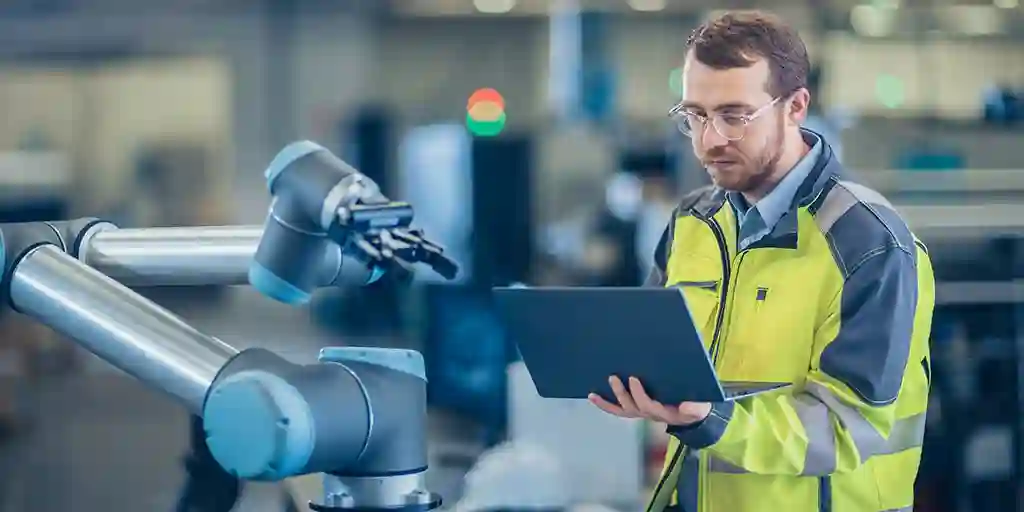
Technology improves our lives by making processes quicker and easier. For example, productivity tools turn tedious data entry tasks that take hours to complete into minutes.
Monitoring technologies like smartwatches and devices implanted into a patient provide medical professionals with more advanced tracking capabilities. Criminal justice technology like fingerprint analysis and DNA profiling help find suspects faster.
1. Computers
Computers are programmable electronic devices that accept raw data and convert it into meaningful output. They have many different uses for business and personal applications.
Today, computers have made tasks that would take days to complete much easier and faster. Using a computer, you can type up a letter in minutes and edit it anytime, spell check and send it to someone across the world in seconds.
Microprocessor chips have made computers smaller, cheaper and faster. They have increased the speed of the central processing unit to nanoseconds & picoseconds.
2. Cell Phones
Cell phones are a modern improvement to the telephone and can do much more than just make calls. They allow people to stay connected to friends and family through text messaging, email and video calling.
They can also provide entertainment through a wide variety of programming. This can be beneficial for kids to help them learn, but it is important for them to use this technology in moderation so they don’t become addicted.
3. GPS Systems
The global positioning system (GPS) is a constellation of satellites that provides navigation, positioning and timing services. It’s a free service that is owned and operated by the United States government.
During an emergency, people can call an emergency hotline and GPS will track their location to dispatch the proper help. This is all made possible because of rubidium clocks on each of the 31 satellites in the GPS network.
4. Electronics
Electronics is a branch of physics that involves the behavior and control of electrons in various devices and systems. It uses passive and active electronic components like diodes, transistors and integrated circuits to manipulate currents and voltages.
Vacuum tubes were the first electronic devices that enabled current amplification, which led to radio broadcasting and long-distance telephony. Later, metal transistors replaced vacuum tubes in radio receivers.
Today, electronics allow people to communicate instantly and across the globe. They also enable televisions to display images, news and entertainment, as well as computers to process information.
5. Telephony
Telephony is the communication technology that allows people to interact over long distances. This includes tools like video calling, messaging, voicemail and faxing.
Traditional telephony works by turning sound waves into electronic signals and transporting them via cables. These cables used to be made of copper but are now more often fiber-optic. Mobile telephony does the same thing, but with radio waves transmitted to cell towers that then transform them into electronic signalling for their destination.
6. Video Games
Video games are software that combines computer hardware and audio/visual technology. They can be played on a variety of devices, including personal computers, television sets and consoles.
Some video games are designed to teach the player a lesson in history or another school subject, which is called educational software or edutainment. Other games are purely entertainment and do not teach the player anything.
The gaming industry has grown rapidly since the 1980s, even after a market crash in the late 1990s. The industry is now a mature sector of the electronics industry.
7. Social Media
Communication technology allows people to interact with each other worldwide via written messages or audio and video content. This includes platforms such as Facebook, Instagram and YouTube. For businesses, this type of technology is a useful way to keep in touch with clients and customers.
It also lets people connect with their friends and family while catching up on news trends. However, excessive social media use can damage relationships and exacerbate mental health problems.
8. Mobile Phones
Mobile phones are handheld electronic devices used to make and receive calls over a cellular network. Also known as cell phones or handphones, they are a vital part of modern life.
They provide instant communication and facilitate activism and citizen journalism. Cell phone technology has improved the lives of billions of people, but it also has some limitations.
Mobile phones can be disruptive when used in public. Polite people learn to turn off their ringers at concerts, and railway conductors often rebuke passengers who use their smartphones on trains.
9. Internet
Computers and smartphones are considered the most influential technology devices on the market. They allow people to access the internet almost anywhere in the world and store files and information.
The Internet allows for instant communication via messaging platforms like WhatsApp and Slack. It also provides a platform for collaborative documents such as Google Docs. It also provides access to online news and media, e-commerce and countless other useful tools.

The xSignal Wizard takes a component-oriented approach to identify potential xSignals – you select the source component and the nets connected to it, and the software analyzes all possible paths from the source component to the designated components, including those passing through series passive components.
The wizard allows you to assign the created xSignals to an xSignal class, and you can also create a new one at this stage.
1. Ensure you have the right audio and video devices
When using xSignal, it is essential to ensure that your hardware and software are configured appropriately. In particular, you should ensure that your audio and video devices are working together properly. If you have any issues, it is important to report these immediately so that they can be resolved.
The xSignal Panel provides a convenient way to identify, create and edit xSignals in your design. The panel can be opened from the xSignal menus, via the Design >> xSignals sub-menu or by right-clicking in your PCB layout.
In the panel, xSignals are displayed in the middle region as node pads joined by a thin line that represents the xSignal path. They are enabled for creation by default, but can be disabled with commands available on the region’s right-click context menu.
The Analyze xSignals button can be used to analyze the xSignal path between the chosen source component and the destination component, including any paths through series passive components. This results in a list of possible What is xsignal that can be created, as shown below.
2. Set up polls
When you work with xSignals, you will want to set up polls to allow multiple users to participate in the session. This will ensure that no one person takes over the session and that everyone has a chance to answer each question. This is especially important when working with large groups of people.
To do this, select the xSignals >> Create xSignals between Components command from the context menu when you are in the design space. A dialog will open to present a choice of source components (again, either single or multi-instance pack-style). Once the selected component is chosen, the dialog will analyze the selected pads and any branches that may be connected from the component to other parts of the board.
The resulting xSignals will be listed in the xSignals panel. To make the xSignals usable, choose an xSignal class from the list at the bottom of the dialog, or enter a name to create a new one.
3. Set a timer
When working with xSignals, it is recommended to set a timer. This will ensure that you do not spend too much time on a task and also prevent people from being distracted by other tasks when the session is ongoing. A timer is especially useful if you are working with multiple team members and you want to keep track of the time spent on each task. You can create a timer in the Options dialog of the xSignal Wizard. This is accessible via the Design >> xSignals sub-menu in the main menus or by right-clicking in the xSignals panel.
The Create xSignals Between Components command builds a group of xSignals from the selected series termination component, using all available pads for signal routing. The resulting xSignals will have names of the form StartNet>_EndNet>_PPn (where PPn is a number).

Global Wise News Compares The Best Flagship Smartphones

These Facts Just Might Get You To Change Your BETYEK Strategy

Arthur Jones: Legacy of the Inventor Who Revolutionized Fitness

How Alexistogel Situs Toto Macau Bet Terendah & Pasti Menang Ensures success

Lovely Cute Usernames For Girls To Shine Bright On Instagram

Wreak Havoc Meaning, Origin, and Usage in Modern English

Snoop Dogg Net Worth 2025 Revealed and How He Built His Empire

6 Things You Need to Know About Buying YouTube Comments

How can education helps in attaining safe and security?

Literature Gap: What It Means And How To Find It

15 Different Types of Technology We Use Everyday

What’s the Cheapest Roofing Material for a Roof Replacement?

Top 7 Forex Trading Strategies For Beginners

9 Reasons Why We Need Education
-
 Social Media2 years ago
6 Things You Need to Know About Buying YouTube Comments
-
 Safety & Security3 years ago
How can education helps in attaining safe and security?
-
 Education3 years ago
Literature Gap: What It Means And How To Find It
-
 Technology9 months ago
15 Different Types of Technology We Use Everyday
-
 Home & Garden3 years ago
What’s the Cheapest Roofing Material for a Roof Replacement?
-
 Forex & Crypto3 years ago
Top 7 Forex Trading Strategies For Beginners
-
 Education3 years ago
9 Reasons Why We Need Education
-
 Marketing9 months ago
How To Check One Vanilla Balance