Technology
Types Of Floor Globes For Sale


Floor globes are known to occupy smaller space as compared with other globes. The floor globes are suitable for use in enclosed rooms and open. They can be moved from one place to another with ease.
There are various types of floor globes for sale that the buyer needs to discern their qualities, function, durability, and suitability before they can purchase them. Below are some of the types of floor globes.
Landen Floor Globe
Landen floor globe is one of the most common globes for sale, made of metal at the base. It has a reclaimed paper fiber that is non-illuminated, with its diameter measuring 16 inches. It has a height of 44 inches and weighs 25 pounds. It is mounted with a full swing that enables it to rotate freely. The swing is numbered, so it indicates the location of a place quickly.
Latitude and longitude are drawn on its surface to calculate the distance from one location to another. The globe has numerous features indicating climatic patterns, relief, and drainage features.
Commander II Floor Globe
Commander II globe is designed to have a removable stand compared to other globes. It measures 16 inches in diameter. Its base is made of a metal meridian that is strong but light in weight. It has a complete swing meridian mounting complemented by a wood stand, making it unique.
Commander II globe combines style with the catastrophic design making it appealing to the eye. It can be moved easily from one place to another since it is not bulky in weight. It shows beautiful features on the earth’s surface, including the physical features and drainage patterns.
It is not easily affected by water. The material used to make the commander II globes is solid and water resistant. However, do not expose it to too much water since the swinging part is made of stiff paper and, with time, may lose its value.
Lancaster Globe
Lancaster globe is made of a wood base, reclaimed fiber globe paper, and a numbered metal meridian. The globe is mounted on a full swing that rotates at 360° and has a diameter of 12 inches, showing different features on its surface.
Lancaster globe is about 32 inches tall, and it features over 4000 named places in the world. It is decorated with numerous colors representing different features on the earth’s surface. The globe is suitable for use in the library, staffroom, or office.
The Lancaster globe is small in size, making it easy for mobility.
Diplomat Globe For Sale
Diplomat globe is one of the most composed globes furnished with various features. It has almost 20,000 named places on its surface. The globe is mounted on a stand that allows it to rotate freely, making it easy to view all sides. It has a large diameter of 32 inches and a height of 51 inches.
The globe quickly spins inside the stand from west to east when moved and shows features, including the world’s plates. Oceans and seas are well represented on the map, and the boundaries are well outlined, depicting the jigsaw fit of the continental margins.
Annapolis Globe For Sale
Annapolis globe measures 20 inches in size and is made of brass-plated meridian metal. It has a wood stand that places it at an appropriate height to be used in the library and offices. It features over 4200 named places on its surface.
Relief features, planets, and drainage patterns are well aligned on its surface. It has a cradle that enables it to move freely on the stand.
Conclusion
There are different types of globes that are sold for various purposes. The globes have different diameters, and the height of their stands differs depending on the diameter’s size and the manufacturers’ design. They are made of different materials of different quality and colors.
Read also more information https://www.comicsonline.co.uk


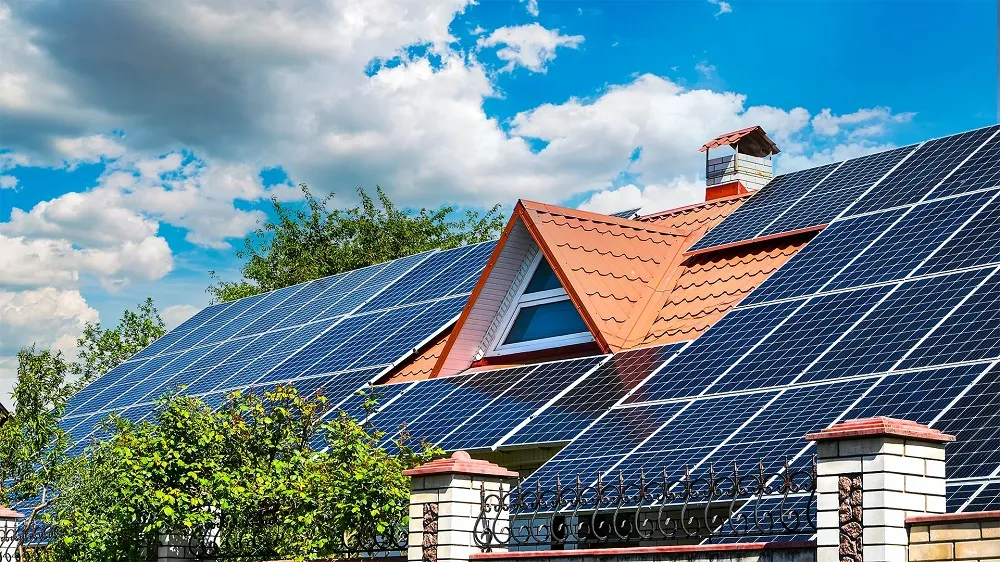
The worlds of renewable energy and telecommunications are converging in a groundbreaking partnership that promises to reshape the way we generate electricity and connect to the internet. Solar panels and 5G technology, two cutting-edge innovations, have formed a symbiotic relationship that leverages the strengths of each to create a more sustainable and connected future. In this article, we will explore the synergy between solar panels and 5G technology, the benefits it offers, and its potential to revolutionize our energy and communication landscapes.
The Rise of Solar Power
Solar power has witnessed remarkable growth in recent years as a clean, renewable energy source. Solar panels, also known as photovoltaic panels, harness sunlight and convert it into electricity through the photovoltaic effect. The proliferation of solar installations on rooftops, solar farms, and even in space has propelled solar energy into the mainstream, contributing to a significant reduction in greenhouse gas emissions and reliance on fossil fuels.
5G Technology: The Next Generation of Connectivity
5G, short for fifth-generation wireless technology, represents the next leap forward in global telecommunications. It promises faster and more reliable internet connectivity, low latency, and the ability to connect an unprecedented number of devices simultaneously. With the advent of 5G, industries such as healthcare, transportation, and smart cities are poised to undergo significant transformations, ushering in an era of greater connectivity and data exchange.
The Synergy Between Solar Panels and 5G Technology
The synergy between solar panels and 5G technology lies in their ability to complement and enhance each other’s capabilities. Here’s how:
- Energy Efficiency: 5G infrastructure requires a significant amount of power to operate efficiently, especially with the deployment of small cell networks and data centers. Solar panels can provide a clean and sustainable source of electricity to power these networks, reducing their carbon footprint and operational costs.
- Grid Resilience: By integrating solar panels into 5G infrastructure, telecom companies can enhance grid resilience. During power outages, solar panels equipped with energy storage systems can continue to provide electricity to critical communication networks, ensuring uninterrupted connectivity during emergencies.
- Reduced Environmental Impact: The energy demand of data centers and communication networks is substantial. By using solar energy to power 5G infrastructure, the environmental impact associated with fossil fuel-generated electricity is significantly reduced, aligning with sustainability goals.
- Remote Deployment: In remote or off-grid areas where 5G coverage is needed, solar-powered base stations and communication nodes can be set up quickly and cost-effectively, bridging the digital divide and bringing connectivity to underserved regions.
- Off-Grid Solutions: Solar panels can power off-grid communication systems, making it possible to establish temporary or emergency networks in disaster-stricken areas or remote locations without access to traditional power sources.
Benefits of the Solar Panels and 5G Technology Synergy
The collaboration between solar panels and 5G technology offers a range of benefits, both for the environment and for our digital connectivity:
- Sustainable Connectivity: Solar-powered 5G infrastructure contributes to more sustainable and environmentally friendly communication networks, reducing greenhouse gas emissions.
- Resilience: Solar energy ensures the resilience of 5G networks during power outages, natural disasters, or emergencies, maintaining vital communication channels.
- Energy Cost Savings: Telecom companies can save on electricity costs by harnessing solar power, reducing their operational expenses and improving profitability.
- Expansion of 5G Networks: The use of solar panels enables the rapid deployment and expansion of 5G networks in remote and underserved areas, enhancing global connectivity.
- Environmental Stewardship: Solar-powered 5G demonstrates a commitment to environmental stewardship and sustainability, aligning with corporate social responsibility objectives.
Applications of Solar-Powered 5G Technology
The synergy between solar panels and 5G technology has diverse applications across various sectors:
- Smart Cities: Solar-powered 5G networks can support smart city initiatives, facilitating real-time data exchange for traffic management, public safety, and infrastructure monitoring.
- Rural Connectivity: In rural and remote areas with limited access to electricity, solar-powered 5G infrastructure can bring high-speed internet connectivity to schools, healthcare facilities, and communities.
- Emergency Response: Solar-powered 5G communication nodes can be rapidly deployed in disaster-stricken areas, enabling first responders to coordinate efforts and provide critical services.
- Agriculture: Smart agriculture relies on real-time data and automation. Solar-powered 5G networks can support precision farming and crop monitoring in rural areas.
- Transportation: Solar-powered 5G infrastructure along highways and railways can enable connected transportation systems, facilitating autonomous vehicles and enhancing safety.
- Industrial IoT: In industrial settings, solar-powered 5G networks can connect a multitude of IoT devices, optimizing operations and improving productivity.
Challenges and Considerations
While the synergy between solar panels and 5G technology holds great promise, there are challenges and considerations to address:
- Initial Investment: The upfront cost of deploying solar panels and 5G infrastructure can be substantial. Telecom companies must weigh these costs against long-term energy savings and benefits.
- Scalability: Ensuring that solar-powered 5G networks can scale to meet increasing demand while maintaining reliability and performance is a complex task.
- Maintenance: Solar panels and associated energy storage systems require regular maintenance to ensure optimal performance. Telecom companies must allocate resources for upkeep.
- Regulatory Hurdles: Regulatory and permitting processes may vary by region and could pose challenges to the deployment of solar-powered 5G infrastructure.
- Technical Integration: Seamless integration of solar panels with 5G equipment and infrastructure is essential for efficient operations. Technical compatibility must be carefully considered.
- Backup Power: While solar panels can provide continuous power during daylight hours, backup power solutions may be needed for nighttime operation or extended periods of cloud cover.
Conclusion
The synergy between solar panels and 5G technology represents a transformative force in our pursuit of sustainable energy and enhanced connectivity. By harnessing the sun’s energy to power 5G infrastructure, we can build more resilient, eco-friendly communication networks that benefit both the environment and society. This symbiotic relationship offers numerous advantages, from reducing carbon emissions and operational costs to expanding connectivity in remote areas and improving emergency response capabilities.
As solar panel technology continues to advance and 5G networks expand globally, we can expect to see this partnership play an increasingly vital role in our daily lives, driving us toward a more sustainable and connected future.

The xSignal Wizard takes a component-oriented approach to identify potential xSignals – you select the source component and the nets connected to it, and the software analyzes all possible paths from the source component to the designated components, including those passing through series passive components.
The wizard allows you to assign the created xSignals to an xSignal class, and you can also create a new one at this stage.
1. Ensure you have the right audio and video devices
When using xSignal, it is essential to ensure that your hardware and software are configured appropriately. In particular, you should ensure that your audio and video devices are working together properly. If you have any issues, it is important to report these immediately so that they can be resolved.
The xSignal Panel provides a convenient way to identify, create and edit xSignals in your design. The panel can be opened from the xSignal menus, via the Design >> xSignals sub-menu or by right-clicking in your PCB layout.
In the panel, xSignals are displayed in the middle region as node pads joined by a thin line that represents the xSignal path. They are enabled for creation by default, but can be disabled with commands available on the region’s right-click context menu.
The Analyze xSignals button can be used to analyze the xSignal path between the chosen source component and the destination component, including any paths through series passive components. This results in a list of possible What is xsignal that can be created, as shown below.
2. Set up polls
When you work with xSignals, you will want to set up polls to allow multiple users to participate in the session. This will ensure that no one person takes over the session and that everyone has a chance to answer each question. This is especially important when working with large groups of people.
To do this, select the xSignals >> Create xSignals between Components command from the context menu when you are in the design space. A dialog will open to present a choice of source components (again, either single or multi-instance pack-style). Once the selected component is chosen, the dialog will analyze the selected pads and any branches that may be connected from the component to other parts of the board.
The resulting xSignals will be listed in the xSignals panel. To make the xSignals usable, choose an xSignal class from the list at the bottom of the dialog, or enter a name to create a new one.
3. Set a timer
When working with xSignals, it is recommended to set a timer. This will ensure that you do not spend too much time on a task and also prevent people from being distracted by other tasks when the session is ongoing. A timer is especially useful if you are working with multiple team members and you want to keep track of the time spent on each task. You can create a timer in the Options dialog of the xSignal Wizard. This is accessible via the Design >> xSignals sub-menu in the main menus or by right-clicking in the xSignals panel.
The Create xSignals Between Components command builds a group of xSignals from the selected series termination component, using all available pads for signal routing. The resulting xSignals will have names of the form StartNet>_EndNet>_PPn (where PPn is a number).

Technology improves our lives by making processes quicker and easier. For example, productivity tools turn tedious data entry tasks that take hours to complete into minutes.
Monitoring technologies like smartwatches and devices implanted into a patient provide medical professionals with more advanced tracking capabilities. Criminal justice technology like fingerprint analysis and DNA profiling help find suspects faster.
1. Computers
Computers are programmable electronic devices that accept raw data and convert it into meaningful output. They have many different uses for business and personal applications.
Today, computers have made tasks that would take days to complete much easier and faster. Using a computer, you can type up a letter in minutes and edit it anytime, spell check and send it to someone across the world in seconds.
Microprocessor chips have made computers smaller, cheaper and faster. They have increased the speed of the central processing unit to nanoseconds & picoseconds.
2. Cell Phones
Cell phones are a modern improvement to the telephone and can do much more than just make calls. They allow people to stay connected to friends and family through text messaging, email and video calling.
They can also provide entertainment through a wide variety of programming. This can be beneficial for kids to help them learn, but it is important for them to use this technology in moderation so they don’t become addicted.
3. GPS Systems
The global positioning system (GPS) is a constellation of satellites that provides navigation, positioning and timing services. It’s a free service that is owned and operated by the United States government.
During an emergency, people can call an emergency hotline and GPS will track their location to dispatch the proper help. This is all made possible because of rubidium clocks on each of the 31 satellites in the GPS network.
4. Electronics
Electronics is a branch of physics that involves the behavior and control of electrons in various devices and systems. It uses passive and active electronic components like diodes, transistors and integrated circuits to manipulate currents and voltages.
Vacuum tubes were the first electronic devices that enabled current amplification, which led to radio broadcasting and long-distance telephony. Later, metal transistors replaced vacuum tubes in radio receivers.
Today, electronics allow people to communicate instantly and across the globe. They also enable televisions to display images, news and entertainment, as well as computers to process information.
5. Telephony
Telephony is the communication technology that allows people to interact over long distances. This includes tools like video calling, messaging, voicemail and faxing.
Traditional telephony works by turning sound waves into electronic signals and transporting them via cables. These cables used to be made of copper but are now more often fiber-optic. Mobile telephony does the same thing, but with radio waves transmitted to cell towers that then transform them into electronic signalling for their destination.
6. Video Games
Video games are software that combines computer hardware and audio/visual technology. They can be played on a variety of devices, including personal computers, television sets and consoles.
Some video games are designed to teach the player a lesson in history or another school subject, which is called educational software or edutainment. Other games are purely entertainment and do not teach the player anything.
The gaming industry has grown rapidly since the 1980s, even after a market crash in the late 1990s. The industry is now a mature sector of the electronics industry.
7. Social Media
Communication technology allows people to interact with each other worldwide via written messages or audio and video content. This includes platforms such as Facebook, Instagram and YouTube. For businesses, this type of technology is a useful way to keep in touch with clients and customers.
It also lets people connect with their friends and family while catching up on news trends. However, excessive social media use can damage relationships and exacerbate mental health problems.
8. Mobile Phones
Mobile phones are handheld electronic devices used to make and receive calls over a cellular network. Also known as cell phones or handphones, they are a vital part of modern life.
They provide instant communication and facilitate activism and citizen journalism. Cell phone technology has improved the lives of billions of people, but it also has some limitations.
Mobile phones can be disruptive when used in public. Polite people learn to turn off their ringers at concerts, and railway conductors often rebuke passengers who use their smartphones on trains.
9. Internet
Computers and smartphones are considered the most influential technology devices on the market. They allow people to access the internet almost anywhere in the world and store files and information.
The Internet allows for instant communication via messaging platforms like WhatsApp and Slack. It also provides a platform for collaborative documents such as Google Docs. It also provides access to online news and media, e-commerce and countless other useful tools.

Packman Vape UK: The Comprehensive Guide to Pacman Disposable Vapes

How to Report a Cryptocurrency Scam: A Step-by-Step Guide to Protecting Yourself

Reporting a Crypto Scam: Essential Steps to Take and Where to File Your Complaint

Fun Sports Games: Enhancing Enjoyment and Physical Fitness

Benefits of Popular Online Slot Games for Economic Social Gain

Dingdong Slot: A Comprehensive Guide to the Popular Online Slot Game

Explore Popular Games and Maximize Profits on Ole777 Link Alternatif

6 Things You Need to Know About Buying YouTube Comments

How can education helps in attaining safe and security?

15 Different Types of Technology We Use Everyday

Literature Gap: What It Means And How To Find It

9 Reasons Why We Need Education

Types Of Floor Globes For Sale

6 Natural Health and Nutrition Tips That Are Evidence-Based
-
 Social Media11 months ago
6 Things You Need to Know About Buying YouTube Comments
-
 Safety & Security1 year ago
How can education helps in attaining safe and security?
-
 Technology1 year ago
15 Different Types of Technology We Use Everyday
-
 Education1 year ago
Literature Gap: What It Means And How To Find It
-
 Education1 year ago
9 Reasons Why We Need Education
-
 Health & Fitness10 months ago
6 Natural Health and Nutrition Tips That Are Evidence-Based
-

 Education6 months ago
Overcoming Challenges in Online Degree Programs: Tips for Students
-

 Marketing1 year ago
Top 12 Marketing Agencies to Grow Your Business in 2023